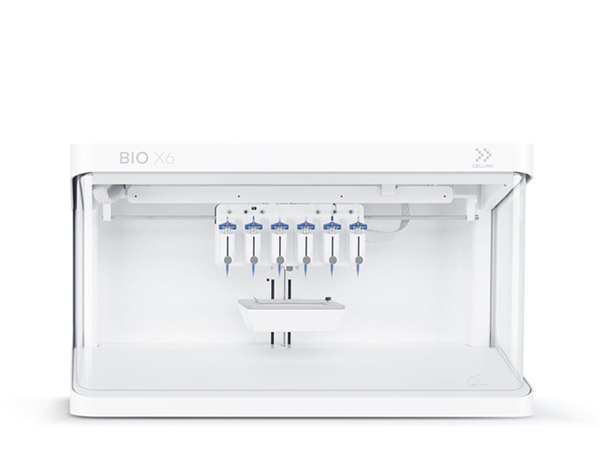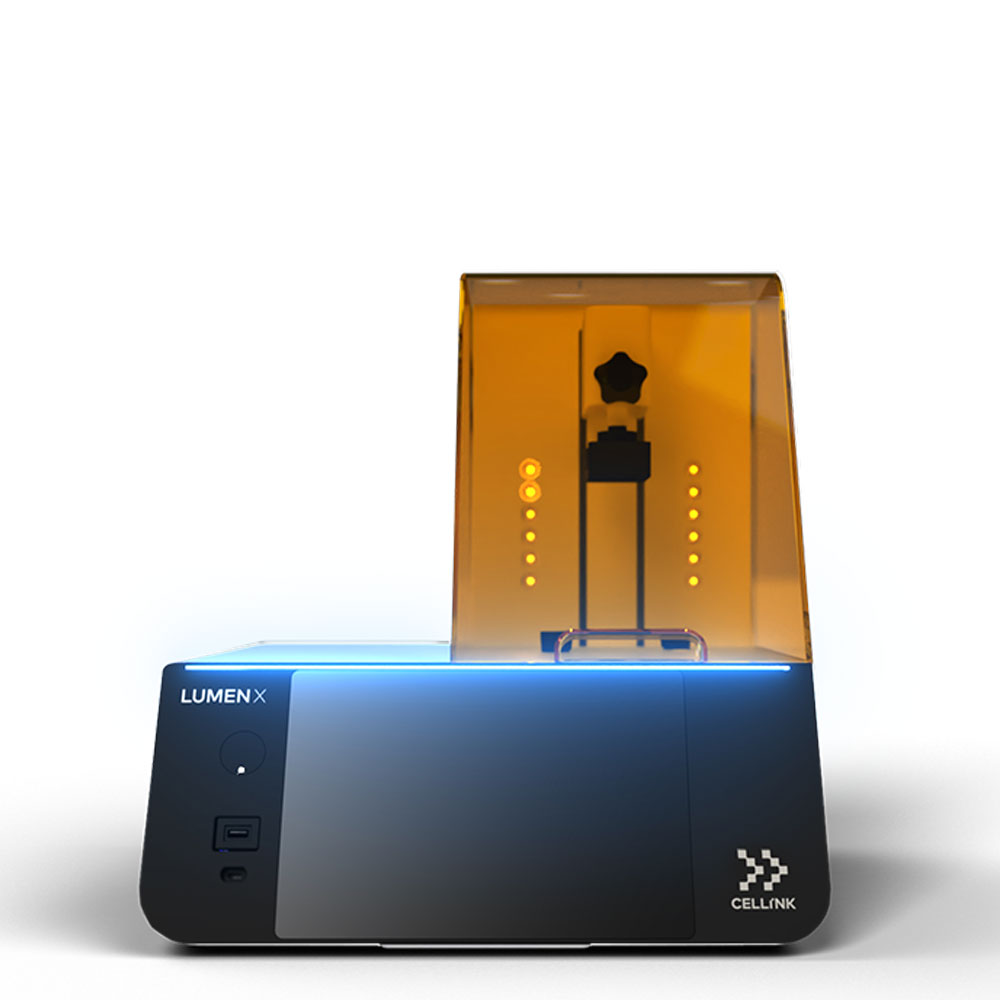

Conventional approaches such as traditional cell culture or animal testing have limitations, prompting the demand for more precise in vitro models in the life sciences. BIO ONE is an instrument that empowers researchers regardless of previous knowledge in constructing more physiologically relevant models, while reducing cost and ensuring more accurate data.

 The BIO ONE is equipped with a mechanically driven syringe-based printhead, ensuring precision and reproducibility in 3D model development.
Mechanical extrusion offers superior accuracy when compared to pneumatic extrusion.
It also helps minimizing material waste by giving you the ability to precisely control the exact material volume of your print.
Bioprinting has become an essential tool in tissue engineering. With its user-friendly interface, the BIO ONE is the ideal stepping stone to start creating 3D tissue models. The easy creation of 3D tissue models such as cartilage or skin is a great boon in the research of a tissue’s regenerative properties, the study of wound healing, and developing in vitro alternatives to animals for cosmetic testing.
The open platform of the BIO ONE allows users to freely develop and readily use their own materials, without any workarounds or fees. Relying on non-proprietary syringes and nozzles, it is possible to print with any bioink. The software allows fine tuning of various printing parameters, including volume and flow, which means you can create protocols for most materials. This ensures the system can be used in multiple areas of material sciences, from bioink development and soft robotics to smart materials.
With printing capability on up to 384-well plates, the BIO ONE enables researchers within the field of drug discovery to easily increase the number of replicates and gain a more accurate understanding of compound activity. This accelerates the drug discovery process by ensuring only the best candidates are carried along to clinical trials. Simply print an array of droplets to investigate drug delivery in easily reproducible in vitro models.