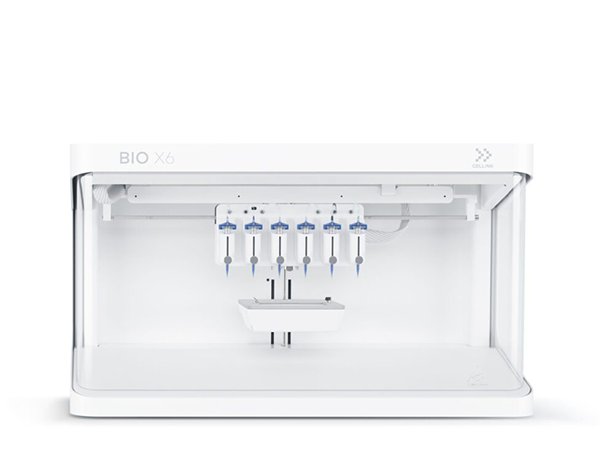
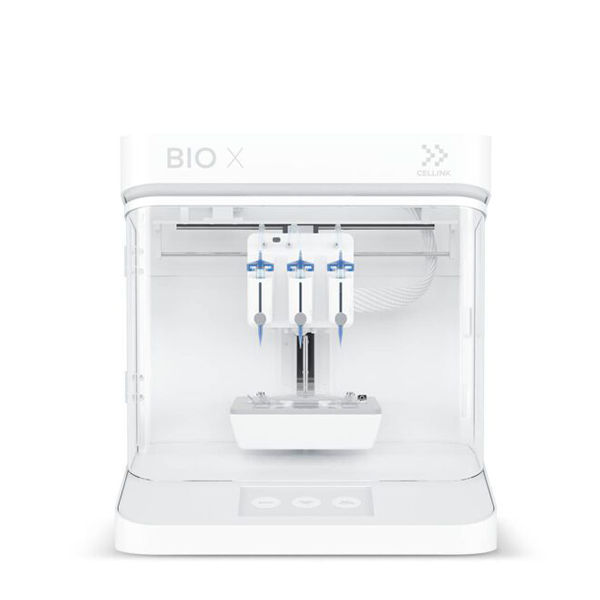
While Cellink offers an extensive portfolio of biomaterials, BIO X is compatible with the widest range of biomaterials available.
As part of the patented Clean Chamber Technology of Cellink, both the BIO X and BIO X6 utilize HEPA filters and built-in UV sterilization, bringing increased cleanliness to the printing chamber and better cell safety.
The range of intelligent printheads brings users of the BIO X the utmost flexibility and interchangeability. The printheads are developed to suit many different biofabrication projects.
 CELLINK offers an extensive portfolio of bioinks but they also understand the importance of material development. This is why the the BIO X6, part of the BIO X series, is an open system that is compatible with the widest range of materials available. Start developing your own bioinks with the high-quality bioink development products of CELLINK or explore their ready-to-print and tissue-specific bioinks.
Generation 3 of the BIO X harnesses the power of the most advanced bioprinting software available today.
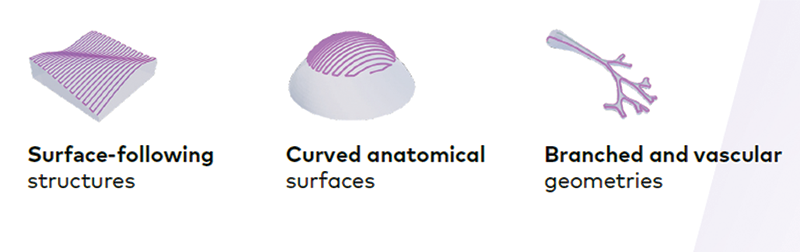
Conventional bioprinting creates structures through stacked horizontal layers. While effective for many applications, this approach can make it difficult to reproduce smooth anatomical contours and complex branched geometries.
DNA Forma Lab is a standalone desktop application that complements DNA Studio 4 and generates geometry-aware toolpaths that follow the shape of your model, helping you create:
Three-dimensional cell cultures offer multiple advantages over 2D cell cultures, including the precise geometrical arrangement of multicellular constructs that can better recapitulate the native 3D human physiology. Extrusion-based bioprinters such as the BIO X offers great flexibility when designing 3D cell culture systems, as they allow researchers to precisely control geometries and the spatial patterning of cells and other biomaterials.
The merger of bioprinting and microfluidics opens the door to on-demand and personalized organ-on-a-chip models and may replace many preclinical steps in future drug trials. The BIO X, combined with microfluidic systems like the VasKit perfusion system allow for complex organ-chip models; and multi-printhead technology can be used in a one-step fabrication design with spatial heterogeneity of tissues.
The BIO X’s exceptional features maximize versatility to enhance your success in the following application areas and beyond.
The BIO X allows for 3D bioprinting with up to three printheads, enabling multi-material and multi-cell flixbility during small and large tissue engineering.
Bioprinters can do more than print with cells, they can also be used for fabricating hydrogel drug encapsulation and extended-release technologies. The BIO X bioprinter offers a variety of printheads that are compatible with different hydrogels. Drugs and bioactives can be mixed within the hydrogels and printed in patterns such as large patches or micrometer-sized beads.
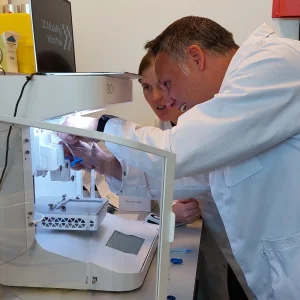 Read our user testimonial Bioprinting for medical innovations and cultivated meat
The BioX 3D Bioprinter is used within the Academy of Applied Science for research into innovative applications in both medical and food technology”, says Olaf.